Sri Lanka is an island rich in history, culture, and natural beauty. For history enthusiasts, architecture admirers, and travelers looking to immerse themselves in a deep cultural heritage, the Sri Lankan Cultural Triangle is an absolute must-visit. This central region of the island tells the story of early Sinhalese civilization, showcasing magnificent temples, towering stupas, and ancient cities that rival the greatest historical sites in the world.
Navigating these vast historical sites can be a massive undertaking. From interpreting the complex history to figuring out transportation between cities, planning the perfect trip requires attention to detail. This is where traveling with a dedicated guide provides a significant advantage. Let us walk you through the key highlights of the Cultural Triangle and show you why exploring it with Ceylon NY Holiday Tours ensures a stress-free, deeply enriching experience.
What is the Cultural Triangle?
The Cultural Triangle is a region in the central plains of Sri Lanka, defined by three historical capitals: Anuradhapura to the north, Polonnaruwa to the east, and Kandy to the south. Within this triangle lie several other significant sites, most notably the Sigiriya Rock Fortress and the Dambulla Cave Temple. This concentrated area contains numerous UNESCO World Heritage sites and serves as the historical heartbeat of the country.
The history of the Cultural Triangle spans over two millennia. It witnessed the rise and fall of powerful ancient kingdoms, the introduction of Buddhism to the island, and remarkable feats of engineering and art. To visit this region is to step back in time and witness the grandeur of a civilization that flourished long before modern times.
Anuradhapura: The First Capital
As the first ancient capital of Sri Lanka, Anuradhapura was established around the 4th century BCE and remained the political and religious center of the island for over a thousand years. Today, it is a sprawling complex of ruins, ancient reservoirs, and active temples that continue to draw thousands of pilgrims every year.
The Sacred Bo Tree (Jaya Sri Maha Bodhi)
One of the most sacred sites in Anuradhapura, and indeed all of Sri Lanka, is the Jaya Sri Maha Bodhi. This ancient fig tree is recorded as the oldest surviving human-planted tree in the world with a known planting date. It was grown from a cutting of the original Bodhi tree in Bodh Gaya, India, under which the Buddha attained enlightenment. Brought to Sri Lanka in the 3rd century BCE by Sanghamitta, the daughter of Emperor Ashoka of India, the tree remains a vibrant center of worship. Observing the devotion of pilgrims dressed in white, offering lotus flowers and prayers, is a profoundly moving experience.
Ruwanwelisaya and the Monastic Ruins
Just a short distance from the Bodhi tree stands the Ruwanwelisaya stupa, an architectural marvel of the ancient world. Built by King Dutugemunu in the 2nd century BCE, this massive white dome stands at 103 meters tall and represents the glory of ancient Sinhalese architecture. The stupa is surrounded by a wall adorned with hundreds of carved elephants, standing shoulder to shoulder, appearing to support the massive structure.
Anuradhapura is vast, and its sites are spread out. You will also want to see the Abhayagiri Vihara, a massive monastery complex, and the Jetavanaramaya stupa, which was once one of the tallest structures in the ancient world, rivaled only by the pyramids of Egypt. Navigating these sprawling ruins in the tropical heat can be exhausting if you are trying to manage your own transportation. Traveling with Ceylon NY Holiday Tours means you can comfortably move between sites in an air-conditioned vehicle, with a knowledgeable guide to bring the history to life, allowing you to focus entirely on the experience rather than the logistics.
Polonnaruwa: The Medieval Masterpiece
Following the decline of Anuradhapura, the capital was moved to Polonnaruwa in the 11th century. While its period of prominence was shorter, the ruins left behind are incredibly well-preserved and offer a clearer picture of ancient urban life and royal grandeur.
The Royal Palace and Gal Vihara
The ruins of the Royal Palace of King Parakramabahu I provide a glimpse into medieval luxury. The palace was originally said to be seven stories high, though today only the massive brick walls of the lower levels remain. Nearby, you will find the Audience Hall, featuring beautiful stone carvings of elephants, lions, and makaras (mythical creatures).
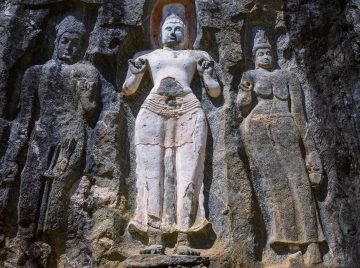
The undisputed highlight of Polonnaruwa is the Gal Vihara, a rock temple showcasing four colossal statues of the Buddha carved directly into a single granite rock face. These statues—one seated, one standing, and one reclining—are considered some of the finest examples of ancient Sri Lankan stone carving. The serene expression on the face of the reclining Buddha is particularly captivating and demonstrates the incredible skill of medieval artisans.
Maximizing Your Time in Polonnaruwa
Polonnaruwa is smaller and more compact than Anuradhapura, making it slightly easier to navigate. However, interpreting the ruins and understanding the chronological layout can still be challenging without context. While some travelers choose to rent bicycles and brave the midday sun on their own, a guided tour offers a much more comfortable alternative. With our experienced team at Ceylon NY Holiday Tours, you get the benefit of tailored pacing. We make sure you visit the key sites when the lighting is best and the crowds are thinnest, ensuring your visit is both educational and relaxing.
Sigiriya: The Lion Rock Fortress
Rising dramatically from the central plains, Sigiriya is perhaps Sri Lanka’s most iconic landmark. This massive column of rock, nearly 200 meters high, was chosen by King Kasyapa in the 5th century as the site for his new capital and royal palace. Today, it stands as a testament to ancient urban planning, architecture, and art.
The Climb and the Frescoes
Ascending Sigiriya is a physical but highly rewarding challenge. The climb involves traversing steep staircases that cling to the side of the rock. About halfway up, you will encounter the famous Sigiriya Frescoes. Painted on the rock face in a sheltered depression, these ancient frescoes depict elegant female figures holding flowers. While their exact identity is debated—some say they are celestial nymphs, others believe they are ladies of the king’s court—they remain a beautiful example of ancient Sinhalese art.
Further up, you reach the Lion Gate. Originally, visitors had to walk through the open mouth of a massive brick lion to access the final ascent. Today, only the giant, intricately carved paws remain, but they provide a clear sense of the fortress’s original intimidating grandeur. Reaching the flat summit reveals the foundational ruins of the royal palace and offers breathtaking, panoramic views of the surrounding jungles and plains.
The Water Gardens and Engineering Marvels
Before you even begin the climb, you walk through the beautifully symmetrical water gardens at the base of the rock. These gardens feature a complex network of pools, fountains, and pavilions. The hydraulic engineering used to power these ancient fountains is so advanced that some of them still function today during the rainy season. Having a professional guide explain the mechanics and history of these gardens adds immense value to the visit, transforming beautiful ruins into a fascinating story of ancient innovation.
Dambulla: The Golden Cave Temple
Located just a short drive from Sigiriya, the Dambulla Cave Temple is the largest and best-preserved cave temple complex in Sri Lanka. It has been a sacred pilgrimage site for over 22 centuries.
Five Caves of Splendor
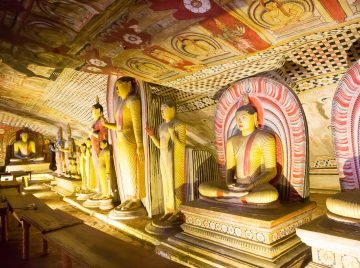
The complex consists of five main caves carved out of a massive rock overhang. Inside these caves, you will find an astounding collection of over 150 statues of the Buddha, as well as statues of ancient Sri Lankan kings, gods, and goddesses. The interiors of the caves are entirely covered in vibrant murals depicting scenes from the life of the Buddha and important events in Sinhalese history.
The dim lighting, the smell of incense, and the sheer volume of religious art create an atmosphere of deep reverence and peace. The second and largest cave, the Cave of the Great Kings, is particularly impressive, featuring a massive stupa and walls covered in intricate paintings. Visiting Dambulla requires walking up a sloping rock path. When you book with Ceylon NY Holiday Tours, our drivers ensure you are dropped off at the most convenient starting point and wait for you in comfort, making the excursion as effortless as possible.
Kandy: The Cultural Heart
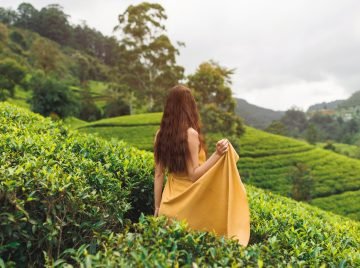
The final point of the Cultural Triangle is the city of Kandy, located in the central highlands. As the last capital of the ancient kings’ era, Kandy successfully resisted colonial rule longer than any other part of the island. It retains a distinct cultural identity and is surrounded by lush green hills and tea plantations.
The Temple of the Sacred Tooth Relic
The focal point of Kandy is the Sri Dalada Maligawa, or the Temple of the Sacred Tooth Relic. This temple houses the relic of the tooth of the Buddha, an object of immense religious and political significance. For centuries, it was believed that whoever held the tooth relic held the right to rule the country. Today, the temple is a bustling center of worship. The daily rituals, known as pujas, are accompanied by traditional drumming and offer visitors a chance to witness living traditions that have continued uninterrupted for generations.
The Kandy Esala Perahera
If you are fortunate enough to visit Kandy in July or August, you might witness the Esala Perahera. This grand festival honors the Sacred Tooth Relic with days of elaborate parades. The streets fill with traditional dancers, fire-breathers, whip-crackers, and dozens of elegantly decorated elephants. It is one of the most spectacular cultural events in Asia. Managing accommodations and viewing spots during this busy time can be incredibly stressful for independent travelers. Relying on an experienced local tour operator ensures you secure the best seats and lodgings without the typical hassle.
Why Tour the Cultural Triangle with Ceylon NY Holiday Tours?
While it is possible to navigate the Cultural Triangle on your own using public buses or negotiating with local drivers, doing so often turns what should be a relaxing holiday into an exercise in stress management. The distances between sites are significant, and the tropical climate can be draining. Trying to figure out bus schedules, haggling over tuk-tuk fares, and constantly worrying about logistics takes away from the experience of the sites themselves.
Comfort, Safety, and Expert Knowledge
By choosing Ceylon NY Holiday Tours, you are choosing peace of mind. We provide safe, comfortable, air-conditioned transportation tailored to your schedule. You will not have to worry about finding the right routes or dealing with local traffic. More importantly, our experienced guides provide the crucial context needed to truly appreciate these ancient sites. Looking at old stones is one thing; hearing the stories of the kings who built them, the engineers who designed them, and the monks who lived among them changes the entire experience.
We handle the complex planning, allowing you to simply enjoy the journey. Our priority is your comfort and satisfaction, ensuring that your trip through Sri Lanka’s history is memorable for all the right reasons.
Practical Tips for Visiting the Cultural Triangle
What to Wear
Since the Cultural Triangle is primarily composed of religious sites, modest dress is strictly enforced. Both men and women must wear clothing that covers their shoulders and knees. Lightweight, breathable fabrics like cotton or linen are highly recommended due to the heat. You will also need to remove your shoes when entering temple grounds, so slip-on shoes or sandals are the most practical choice. Be mindful that the stone and sand at these sites can get very hot under the midday sun; wearing socks can help protect your feet from the heat.
Best Time to Visit
The Cultural Triangle can be visited year-round, but the best weather typically occurs between January and April, when the days are mostly dry and sunny. The region is located in the dry zone of the island, so temperatures are generally high. To avoid the intense midday heat, it is best to start your site visits early in the morning or late in the afternoon.
Conclusion
The Cultural Triangle offers an unparalleled window into the rich, complex history of Sri Lanka. From the towering stupas of Anuradhapura and the rock-cut masterpieces of Polonnaruwa to the engineering marvels of Sigiriya and the enduring traditions of Kandy, this region is a testament to human ingenuity and devotion.
Do not leave your dream vacation to chance. Allow us to take the burden of planning and logistics off your shoulders so you can fully immerse yourself in the wonders of ancient Sri Lanka. Reach out to us today to start planning your perfect itinerary.